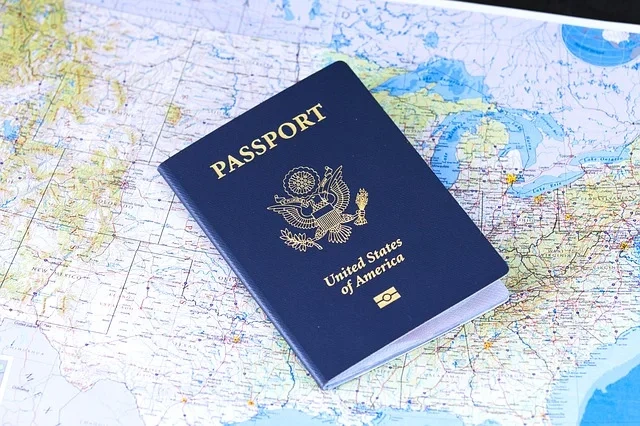
Thailand's Visa System Has Changed

Thailand's visa system historically penalized applicants under retirement age (50+). Border runs, visa agents, and "gray area" arrangements were the norm. In 2026, the framework has shifted. Thailand now actively recruits digital workers and high-income professionals through legitimate visa channels.
If you're under 50 and planning to stay in Thailand, you have three primary legal pathways. Each serves a different financial profile and lifestyle need.
DTV (10,000 THB fee, 500k THB balance) is best for remote workers earning under $80k/year. LTR (20,000-25,000 THB, 10-year validity, 17% tax incentive) suits high-earners $80k+ annually. Privilege Visa (600k+ THB) skips documentation entirely for business owners and high-net-worth individuals. Read on to understand which fits your profile.
1. The DTV: The Dominant Choice for Remote Workers & Freelancers
The Destination Thailand Visa (DTV) is the entry point for 90% of under-50s moving to Thailand legally in 2026. It offers 5 years of validity, costs only 10,000 THB to apply, and requires no complex income verification. just 500,000 THB in liquid savings.
Core Requirements at a Glance
- Visa validity: 5 years, multiple entries allowed
- Permission to stay per entry: 180 days (renewable once in-country for additional 180 days, or reset via border hop)
- Application fee: 10,000 THB (approximately USD $285)
- Bank balance required: 500,000 THB (approximately USD $14,300 AUD $24,000), held for minimum 90 days before application
- Work eligibility: Remote work for foreign companies/clients only (no Thai employment allowed)
- Processing time (Chiang Mai): 2-3 business days
Who It's For
- Remote employees: Working for non-Thai companies with salary 30,000+ THB/month
- Freelancers & consultants: Earning 40,000+ THB/month from global clients (3+ verified contracts)
- Digital nomads: Need flexibility to work and travel within Thailand and SE Asia
- Soft Power seekers: Want to study (Muay Thai, language) while working remotely
Real Cost Breakdown (First 12 Months in Chiang Mai)
- DTV application fee: 10,000 THB
- 180-day extension (day 150-180): 1,900 THB
- Accommodation (monthly): 8,000-20,000 THB depending on Nimman vs Old City
- Living expenses (food, transport, utilities): 15,000-30,000 THB/month
- Total visa + compliance costs Year 1: 11,900 THB
Comparison: Tourist visas require border runs every 60 days (transport cost 3,000-8,000 THB). After just 3 border runs, you've spent more than a DTV application fee. By month 4, DTV is financially superior.
The 180-Day Cycle: Extension vs Border Hop
After your initial 180-day entry stamp, you have two options:
- In-country extension (recommended): Visit Chiang Mai Immigration on day 150-180, pay 1,900 THB, receive another 180 days. Simplest path. Most DTV holders choose this.
- Border hop: Leave Thailand before day 180, return to generate a fresh 180-day stamp (free). Popular with those who want to travel or avoid immigration offices. Cost: 3,000-6,000 THB transport + accommodation.
Chiang Mai DTV Application Reality
Chiang Mai Immigration processes 15-20 DTV applications per week. This is their most common visa type. Officers understand the DTV well and move quickly. Processing happens at the Promenada office (Huay Kaew Road), not the downtown location. Hours are 08:30-11:30 weekdays only.
Documents needed: Passport (original), completed TM.7 form (provided on-site), one 4x6 photo (white background), bank statements (90+ days showing 500k THB balance), employment contract or freelance portfolio. Bring copies of everything; officers sometimes request them.
Guru Tip: If applying for DTV extension (at day 150-180 of your stay), the officer may request an updated employment letter or proof of funds balance. Bring both proactively. This single document prevents 95% of extension delays. Most DTV extensions are approved same-day if documentation is complete.
2. The LTR Visa: The 10-Year Path for High-Earners
The Long-Term Resident Visa is Thailand's answer to digital professionals earning substantial income. It targets remote employees, business owners, and high-income freelancers who want long-term stability without the 5-year renewal cycle of the DTV. Introduced in 2023, the LTR has become the standard for serious digital workers in Chiang Mai.
Eligibility Requirements
- Annual income (salary): USD $80,000 minimum (approximately 2.8 million THB) if working remotely
- Education exemption: USD $40,000 minimum if you hold a Master's degree in STEM, finance, engineering, or business
- Work experience: 3+ years in your current field (verified by employment letter)
- Company requirement: Employment letter must come from a registered company with clear letterhead and official stamp
- Tax documentation: Last 2 years of personal income tax returns or company business registration documents
Visa Duration and Compliance Benefits
- Validity period: 10 years from date of issue (no renewal required until year 10)
- Permission to stay: 1 year per entry with multiple re-entries allowed
- Tax incentive: 17% flat tax rate on all Thai-sourced income (dividend income, rental income, or work in Thailand)
- Reporting obligation: Annual compliance notification (replaced 90-day reporting requirement as of 2025)
- TM30: Still required within 24 hours of new accommodation (same as all visas)
- Re-entry permit: Needed if leaving Thailand; annual stamp costs 3,800 THB or one-time re-entry is 1,000 THB
Employment Verification: What Immigration Actually Checks
LTR applications require income verification more rigorous than DTV. Here's what Chiang Mai Immigration checks:
- Employment letter authenticity: Officers verify company details against business registration databases. They look for specific company registration numbers (sometimes they call or email the company).
- Salary documentation: Bank statements must show consistent monthly deposits matching your stated salary. Irregular deposits invite follow-up questions.
- Income tax returns: Personal returns must align with stated salary. Discrepancies between your employment letter (USD $80k) and tax return ($50k) trigger rejection.
- Degree verification: If claiming the Master's degree exemption (USD $40k income threshold), bring official transcripts or a diploma. Copies are insufficient; officers sometimes request certified translations.
Real Cost Analysis: DTV vs LTR Over 10 Years
The financial comparison matters when deciding between visas:
- DTV pathway (5-year + renewal): 10,000 THB initial + 1,900 THB extensions (twice yearly) = 10,000 + 22,800 THB over 10 years. Total: 32,800 THB in visa costs.
- LTR pathway (10-year single visa): Application fee varies by processing location (Bangkok: 15,000 THB, regional: 20,000 THB). Annual reporting: 200-500 THB. Total: 20,000 THB + 5,000 THB reporting = 25,000 THB in visa costs.
- Tax savings (significant differentiator): If earning USD $100k/year in Thailand (property rental, dividend income), the 17% flat rate saves approximately 200,000-400,000 THB annually compared to progressive tax rates on DTV earners.
- Break-even point: For pure remote workers (no Thai income), cost difference is 7,800 THB over 10 years. For anyone with Thai rental or investment income, LTR saves significantly.
Real Applicant Profile: USD 85k Software Engineer
Maria, a US-based software engineer earning USD $85k/year remotely, decided between DTV and LTR. Her company provided a standard employment letter with registration details. Her bank statements showed consistent USD $7,083/month deposits. Last year's tax return documented $85,100 income. Processing time in Chiang Mai: 5 business days. Approval granted with no follow-up questions due to documentation alignment.
Key detail: Her employment letter from a US C-corp included the EIN (company tax ID). She brought a LinkedIn profile screenshot and a one-page company description. Immigration cross-referenced the company domain and approved based on professional credibility signals.
Chiang Mai LTR Application Process
Chiang Mai Immigration's LTR processing is more structured than DTV. You must apply in-person (no agent representation). Processing takes 5-7 business days. The office is the same Promenada location (Huay Kaew Road), but LTR applications are routed to a senior officer.
Required documents:
- Passport (original + copy)
- Completed TM.88 form (LTR application form)
- 4x6 photo (white background)
- Employment letter (on company letterhead, signed, with registration number)
- Last 2 years of personal income tax returns (original + copy)
- Last 2-3 months of bank statements showing salary deposits (original + copy)
- Educational diploma (if claiming degree exemption)
- Medical certificate (chest X-ray from Thai hospital, 2,000-3,000 THB cost)
Guru Tip: Medical certificate delays happen frequently. Schedule your X-ray 1 week before application to allow time for results. Chiang Mai's Chiang Mai Ram hospital (Mahavalee Road) offers fast turnaround (same-day). Bring your passport to the hospital; they file the certificate directly to immigration if you ask.
3. The Privilege Visa (Thailand Elite): The "Money Talks" Option
The Thailand Privilege Visa, commonly called Thailand Elite, is the visa category for those who want to skip documentation entirely and leverage capital. It bypasses income verification, bank balance requirements, and employment letter scrutiny. You purchase a membership rather than applying for a visa; the visa follows automatically.
Membership Tiers and Costs
- Elite 5-Year membership: 600,000 THB (approximately USD $17,000 AUD $26,000)
- Elite 20-Year membership: 2,000,000 THB (approximately USD $57,000 AUD $86,000)
- Privilege Visa category: Technically separate from Elite (newer program), starting at 650,000 THB for flexible membership terms
All tier levels provide identical visa benefits. The difference is membership duration and renewal obligations (Elite renews every 5 or 20 years; Privilege offers annual renewal flexibility).
What You Actually Get (Beyond the Visa)
- Visa component: Multiple-entry, 5-year validity (for Elite); 1-year renewable permission to stay per entry
- Airport privilege: Fast-track through Suvarnabhumi and regional airports (saves 10-20 minutes at immigration)
- Dedicated concierge: 24/7 phone support (useful for visa extensions, address changes, travel queries)
- Visa extension assistance: Staff handle re-entry permits and annual renewals; you attend one appointment, they submit paperwork
- Residence card: Luxury membership card + identity booklet (more of a status symbol than a functional benefit)
- No 90-day reporting requirement: Elite members report annually instead of every 90 days
Processing and Application Reality
You cannot apply for Thailand Elite directly. Instead, you purchase membership through authorized agents (Thailand Privilege, Royal Privilege, or official channels). Application steps:
- Step 1: Contact an Elite agent with your passport copy and basic details.
- Step 2: Transfer membership fee to agent's Thai bank account (60-90 day processing).
- Step 3: Agent submits documentation to the official Elite center (Bangkok).
- Step 4: You receive membership card and visa approval letter. Immigration stamps your visa into your passport.
- Step 5: Visit any Thai embassy or immigration office for the actual visa stamp (a formality).
Processing time: 60-90 days from payment to visa approval. Many Elite members complete this before arriving in Thailand.
Chiang Mai Privilege Visa Reality
Chiang Mai rarely processes Elite/Privilege visas directly; most members complete their visa outside Thailand then migrate to Chiang Mai. If you need an extension or renewal in Chiang Mai, the concierge team handles submission by mail or through partner immigration offices in Bangkok.
Advantage in Chiang Mai: Elite members skip the 90-day reporting visit entirely. You report annually to any immigration office (can be done online in some provinces, though Chiang Mai still requires in-person visits for compliance). This saves 4 visits per year to the immigration office.
Who Actually Uses This (and Why)
- Business owners with complex finances: Self-employed individuals whose income doesn't align neatly with tax returns. Elite avoids documentation scrutiny.
- Retirees under 50 (offshore income): Those living off investment returns or rental income earned outside Thailand. Income verification becomes complicated; Elite bypasses it.
- High-net-worth individuals: Those who value time savings over cost. 600k THB is negligible for individuals with substantial capital.
- Frequent business travelers: Airport fast-track saves significant time for those flying in/out of Thailand monthly.
The Hidden Downside (Worth Considering)
- Agent dependency: You're locked into a commercial relationship for visa renewals. If the agent goes out of business, you manage renewals independently (still possible, but more friction).
- Concierge limited scope: They handle visa paperwork, not immigration compliance broadly. TM30 registration, visa violations, and legal issues still fall on you.
- Cost vs. actual savings: Airport fast-track is the primary tangible benefit. Annual concierge calls average 2-3 times per member. For most, the 600k THB investment doesn't break even on convenience savings.
- No income tax advantage: Unlike LTR, Elite provides no tax incentive. You pay standard Thai tax rates on Thai-sourced income.
Guru Tip: Real Numbers on Elite Value
If you fly in/out of Thailand 6 times per year, fast-track saves approximately 10 minutes per transit (total 60 minutes/year). That's 3,600 THB per minute of time saved over 5 years. At 600k THB invested, your hourly cost is about 50,000 THB per saved hour of immigration waiting. Most professionals can outsource other tasks (admin, errands, social media) for far less per hour. Elite makes sense for those who value departure lounge time and dislike immigration offices; it's a lifestyle choice, not an economic one.
In Chiang Mai, immigration officers have seen a sharp rise in DTV applications since late 2025. If you're applying in-country (visa extension), bring your accommodation proof (rental agreement, hotel booking) and a letter from your employer stating your remote work arrangement. Officers now cross-reference employment letters with company websites. A vague letter invites follow-up questions. Specificity. your job title, the work you do, the company domain. closes the conversation faster.
Which Visa Is Right for You? Decision Framework
DTV: Choose This If...
- Your annual salary is under USD $80,000
- You work remotely for a non-Thai company
- You can save 500,000 THB for 90 days before application
- You want the lowest-cost entry (10,000 THB fee)
- You prefer minimal paperwork (no tax returns required)
- You may travel out of Thailand within 5 years and want flexibility
LTR: Choose This If...
- Your annual salary is USD $80,000+
- You earn Thai-sourced income (rental, dividends, business in Thailand)
- You have 2 years of tax returns and employment documentation ready
- You want 10-year stability without renewal stress
- Tax efficiency matters (17% flat rate vs progressive rates)
- You plan to stay in Thailand 10+ years
- You want stronger legal standing than DTV (higher tier visa classification)
Privilege Visa: Choose This If...
- You have 600,000+ THB to invest in membership
- Your income is complex (dividends, offshore funds, self-employed)
- You want to avoid income documentation and verification entirely
- You value convenience (airport fast-track, concierge support)
- You fly in/out of Thailand frequently
- You prefer outsourcing visa administrative tasks
- Cost is less important than simplicity
Quick Comparison Table
| Aspect | DTV | LTR | Privilege |
|---|---|---|---|
| Application fee | 10,000 THB | 20,000 THB | 600,000+ THB |
| Visa validity | 5 years | 10 years | 5 years |
| Reporting requirement | Every 90 days | Annually | Annually |
| Income verification | Bank balance only | 2-year tax returns | None |
| Processing time | 2-3 days | 5-7 days | 60-90 days |
| Tax advantage | None | 17% flat rate (Thai income) | None |
2026 Compliance: The TDAC Registration
The Thailand Digital Arrival Card (TDAC) is now mandatory for all arrivals, regardless of visa type.
How It Works
- Register online 72 hours before departure to Thailand
- Link your TDAC to your visa category at immigration
- Failure to sync results in delays at port of entry
Chiang Mai Note
Chiang Mai Immigration is strict about TDAC compliance. Mismatches between your TDAC and your visa at check-in can result in a 30-minute additional screening. Register your TDAC the moment your flights are booked.
Mainstream vs Deep Cut Paths
Mainstream Path: DTV for Most Under-50s
- Lower barrier to entry (500k THB vs higher LTR documentation)
- Widely understood by immigration officers
- Fastest processing time in Chiang Mai
Deep Cut Path: LTR if You Have the Income
- 10-year stability (vs 5-year with DTV)
- Tax benefits (17% flat rate) save significant money over a decade
- Annual reporting is less frequent than 90-day reporting
- Stronger legal position if Thailand's political landscape shifts
Frequently Asked Questions
No. The DTV is strictly for remote work with foreign entities. To work for a Thai employer, you must hold a Non-Immigrant B visa and secure a standard work permit. If you're caught working for a Thai company on a DTV, you risk visa cancellation and re-entry ban. The prohibition is enforced during random workplace audits.
No. Like the Tourist Visa, it is classified as temporary despite its 5-year duration. Permanent residency in Thailand requires 5 consecutive years on a Non-Immigrant visa (such as Non-Immigrant O or Non-Immigrant B), not DTV. If you're planning permanent residence, transition to LTR or another Non-Immigrant category after 1-2 years on DTV.
Waiting is inefficient. The DTV costs 10,000 THB and offers more flexibility than the Retirement Visa (which requires 800,000 THB bank balance or 65,000 THB monthly income). Use the DTV now; you can switch to Retirement at 50 if you choose. Many 50+ individuals actually stay on DTV instead because it's cheaper.
The DTV visa validity is 5 years from issuance. Within that 5-year window, you can extend your permission to stay indefinitely (180-day cycles). When your visa expires after 5 years, you must apply for a new DTV or switch to another visa category. There is no limit to how many times you can re-apply for DTV, as long as you meet eligibility criteria each time.
Not for initial DTV approval. However, during 90-day reporting or extension, immigration can ask for updated bank statements to confirm financial stability. Some officers spot-check balances; others don't. To be safe, maintain at least 300,000-400,000 THB in savings at all times. For DTV renewals (year 5), balance verification becomes stricter again.
It's possible but difficult. LTR technically requires an employment letter from a registered company. Self-employed freelancers can create a company letterhead, but immigration may request company registration documents and business verification. An alternative: stay on DTV and use Privilege Visa if documentation is too burdensome. Chiang Mai immigration has rejected self-employed LTR applications when the "company" lacks official registration.
Summary
The DTV is the 2026 entry point for under-50s pursuing remote work or digital nomad lifestyles. The LTR is the choice for high-earners seeking 10-year stability and tax efficiency. The Privilege Visa remains the fastest route for those prioritizing convenience over cost.
Unsure which path suits you? Contact CMLocals on WhatsApp for a personalised roadmap based on your income and work situation.