Choosing Your Path to Chiang Mai in 2026

Chiang Mai has matured. It is no longer just a "nomad stopover"; it's a long-term home for thousands of digital professionals and cultural students. But as the city grows, so does the complexity of staying here legally. In 2026, the choice usually boils down to two options: The DTV or the ED Visa.
In 2026, the DTV is the superior choice for remote workers and freelancers with 500,000 THB in savings, offering 5 years of flexibility for a one-time 10,000 THB fee. The ED Visa remains the best entry point for those who want to learn Thai but lack the 500k THB liquid cash requirement, and since 2026 it's the only entry point for language study specifically, Thai language schools no longer qualify as a DTV Soft Power activity at all. The DTV also now requires two new documents: proof of citizenship or permanent residence, and a police clearance certificate.
1. The Destination Thailand Visa (DTV): The 5-Year Powerhouse
Launched to replace the "border run" culture, the DTV has become the most sought-after visa in Southeast Asia. It offers genuine long-term stability for remote workers without requiring a company registration in Thailand or employment with a Thai entity.
Who It's For (The Real Categories)
- Remote Employees: Working for a company based outside Thailand. Immigration checks your employment letter and cross-references company registration details. They verify the company exists and has a legitimate business domain.
- Freelancers with Verifiable Clients: Designers, developers, consultants with 3+ documented client contracts. Immigration scrutinises your invoices (they must show consistent monthly income, not sporadic payments). Rates of 40,000+ THB/month are expected.
- Soft Power Participants: Those enrolled in Muay Thai camps, culinary schools, or meditation centres. Soft Power technically requires "substantial" participation, and course-length expectations have moved from a six-month minimum earlier in 2026 toward nine months more recently. Muay Thai training 4+ times per week is the clearest qualifying example. Thai language schools no longer qualify for DTV Soft Power as of 2026, language learners now need the ED visa instead.
Now required: every DTV application, regardless of category, now also requires proof of citizenship or permanent residence in the country of application, plus a police clearance certificate issued within the last six months. Applicants generally need to apply from their own country of citizenship or residence rather than a convenient third country. This does not apply to the ED visa. See the full DTV visa guide for details.
The Financial Requirement (And What's Actually Checked)
The 500,000 THB proof of funds must be held for minimum 90 days before application. In 2026, Chiang Mai Immigration verifies this with 3-6 months of bank statements. They check:
- Continuity: The balance must remain in the account at all times; sudden withdrawals before application raise questions.
- Source: Large deposits shortly before application trigger scrutiny. Officers ask "where did this money come from?" Legitimate sources: salary deposits (ongoing monthly payments), inheritance (documented), savings from previous employment.
- Account type: Savings account preferred over current accounts. Some officers request recent account opening dates (to prevent borrowed-funds scenarios).
Employment Verification: What Officers Actually Check
DTV applications now include employment letter verification. Chiang Mai Immigration:
- Validates company details: They cross-reference your employment letter against business databases. A letter from "ABC Corp" must match registered company information (EIN for US companies, business registration for EU).
- Checks company websites: They sometimes visit the company website to verify it's real. LinkedIn profiles and professional websites count as verification signals.
- Rejects vague titles: "Consultant at Tech Company" without specifics invites rejection. Officers want: specific job title, department, work description, and company domain (.com, .co.uk, etc.).
- Verifies duration: Employment letters must state "3+ years in current role" or similar. Recent hires face additional scrutiny.
Real Applicant Profile: DTV Success Case
James, a 32-year-old UK software engineer earning GBP 60k (USD $75k), applied for DTV in Chiang Mai. His employer provided a letter on company letterhead with company registration number, his specific job title (Senior Backend Developer), 5+ years tenure, and a brief description of his role. He had 6 months of salary deposits (GBP 5,000/month) showing consistent income. His bank statement showed 1.2 million THB in savings (well above 500k requirement). Processing time: 2 business days. Approved with no follow-up questions due to documentation alignment and professional credibility signals.
The Perks (And Real Benefits)
- 5-Year Validity: Multiple entries allowed within the 5-year window. You can leave and re-enter Thailand without visa restrictions.
- 180-Day Permission to Stay: After initial stamp, you deal with immigration twice yearly (extension or border hop). This beats Tourist Visas which require border runs every 60 days.
- No Annual Income Tax Obligation: Unlike Non-Immigrant B holders, you don't report Thai tax on remote income (if not Thai-sourced).
- Family Options: Spouses can apply for dependent visas (Non-Immigrant O). Children under 20 can join as dependent family members (not a separate visa).
2. The ED Visa (Non-Immigrant ED): The Cultural Immersion
The ED visa has been the backbone of the Chiang Mai expat community for years. It allows you to stay while learning Thai language, martial arts, or other registered education programs. Unlike the DTV, you don't need proof of funds; instead, you need proof of enrolment and regular attendance.
Who It's For (Realistic Categories)
- Thai Language Learners: Serious students committed to 10+ hours per week of formal instruction. Since language schools no longer qualify for the DTV, the ED visa is now the only visa route for this group. Popular schools: Chiang Mai University (Thai program), AUA (American University Alumni), Bangkok University satellite campus, and private tutors (formal arrangements only, not casual lessons).
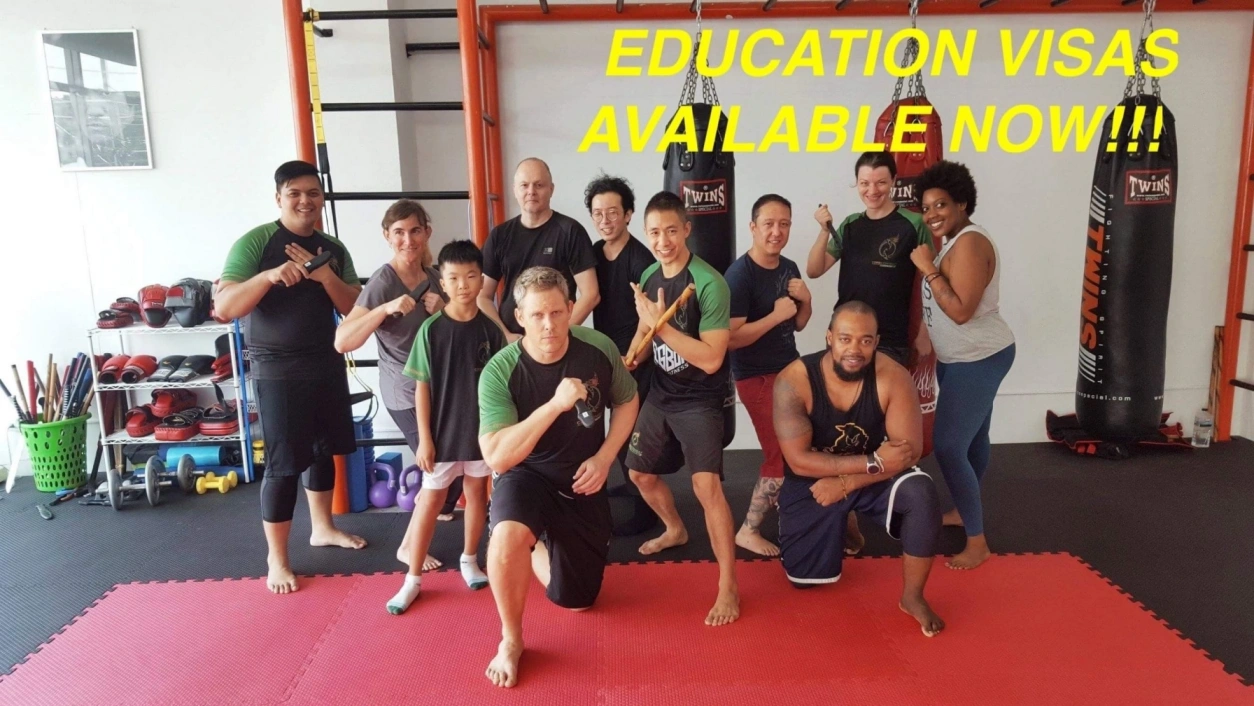
- Martial Arts Practitioners: Muay Thai, Boxing, and Martial Arts students training 4+ times per week at certified academies. Must be registered institutions; private coaching alone doesn't qualify. Popular schools: Lanna MMA, Santitham Muay Thai, Santisuk Muay Thai Camp.
- Soft Power Program Participants: Those pursuing formal education in health, meditation, culinary arts, or traditional crafts at approved institutions. Courses require 20+ hours monthly commitment.
- Cost-Conscious Nomads: Those who don't have 500k THB liquid savings but can afford 3,500-8,000 THB/month in tuition. ED visa holders often combine remote work (technically not authorised, but enforcement is minimal) with study commitments.
The ED Visa Attendance System (How It's Actually Verified)
In 2026, Chiang Mai's Education Monitoring Taskforce conducts random school attendance audits. Here's what happens:
- Immigration reviews school attendance records: During 90-day reporting, immigration requests attendance sheets from your school. They check your attendance percentage (typically 75%+ required).
- Spot-check interviews: Random students are interviewed during extension appointments. Officers ask basic questions about what you're studying. Language students might be asked to read Thai script or translate sentences. Muay Thai students are asked about techniques and training schedule.
- Zero-attendance rejections: If your school reports zero attendance for extended periods, your extension is automatically rejected. You'd then need to apply for a new ED visa (if re-enrolling) or switch to another visa category.
- School credibility matters: Immigration maintains a list of approved institutions. Courses at non-approved schools can trigger rejection. Always verify your school is registered with Thai Ministry of Education.
The Reality Check (2026 Edition)
The "study-on-paper-only" days are mostly dead. The Chiang Mai Education Monitoring Taskforce now performs random checks at schools. If you're on a language visa but haven't attended classes in 3 months, your extension is at risk. Similarly, Muay Thai students who claim 5 classes/week but only attend once monthly are flagged during spot-checks.
However, "substantial" participation is interpreted loosely. 2 days per week of language class (6 hours) or 3 days per week of Muay Thai training (15 hours) are typically accepted. Officers understand that digital nomads don't attend school full-time; part-time study commitments are mainstream.
ED Visa Program Costs in Chiang Mai (Real Numbers)
- Thai Language Schools: 3,500-6,000 THB/month (AUA, Chiang Mai University program). Semester commitment typical (4-6 months).
- Muay Thai Camps: 4,000-10,000 THB/month (depending on training frequency and facility). Some offer daily classes (unlimited); others charge by class.
- Visa Application Fee: 5,000-6,000 THB (initial application)
- Visa Extension Fee: 1,900 THB per extension (every 90 days, or when semester changes)
- School Letter Cost: Usually included in tuition or free. Some schools charge 500-1,000 THB for official letter.
Real Applicant Profile: ED Visa Success Case
Sarah, a 27-year-old freelance designer from Australia earning AUD $55k/year, didn't have 500k THB readily available. She enrolled in AUA's Thai language program (intensive schedule: 12 hours/week, 5,500 THB/month). Initial ED visa application: 5,500 THB. First 90-day extension: 1,900 THB + school letter. She attended consistently (87% attendance verified during random check). At 6-month mark, she renewed her study commitment (new semester). Processing time for extensions: 1-2 business days (much faster than DTV). By year 1, her total visa costs: 16,000 THB (application + 3 extensions). She now holds ED visa because it costs less than DTV and her cash is better invested in business.
2026 Cost Comparison: 12-Month Outlook
Let's look at the actual costs of living in Chiang Mai on both visas for one year.
| Expense Category | DTV Visa (1st Year) | ED Visa (Thai Language) |
|---|---|---|
| Visa Application Fee | 10,000 THB | ~5,000 THB |
| Tuition / Soft Power Fee | ~5,000 THB (Short course) | ~35,000-45,000 THB (1 Year) |
| Extensions (90/180 days) | 1,900 THB (Once) | 7,600 THB (4x 1,900 THB) |
| Required Bank Balance | 500,000 THB (Personal) | None (Typically) |
| Total Admin Cost | ~16,900 THB | ~47,600-57,600 THB |
Strategic Considerations for 2026
The Tax Question (Income Reporting)
DTV holders working remotely: Thailand considers you a tax resident if you spend 180+ days in the country per year. However, if your employer is not Thai-based and you're not earning Thai-sourced income, you typically don't file Thai taxes on remote work (the tax jurisdiction often remains your home country). That said, if your bank shows significant deposits, Thai authorities may ask questions. Many DTV holders work with accountants to clarify their filing obligations.
ED visa holders: You're classified as a "student," making your tax profile simpler. Students are explicitly not authorised to work, so no tax filing is expected. However, if caught working on an ED visa, you risk cancellation.
The 90-Day Reporting and Compliance
Both visas require 90-day reporting (TM.47 form, in-person at immigration). However, the experience differs:
- DTV holders: Simple reporting (5 minutes). Officers verify you're still in Thailand and your bank balance hasn't dropped below 300k THB. No follow-up questions typically. Alternative: border hop every 180 days (many do this instead).
- ED visa holders: Reporting linked to school calendar. Schools often submit bulk reporting on behalf of students. If attending part-time, you still report but with school attendance verification.
Pro tip: ED visa reporting is usually faster because schools handle the bulk administrative work. DTV reporting requires you to do it yourself.
Chiang Mai Immigration Specifics: How They Treat Each Visa
Chiang Mai Immigration processes roughly 400 DTV cases and 200 ED cases per month. Here's how they approach each:
- DTV applications: Handled at Promenada office (Huay Kaew Road), 08:30-11:30 weekdays. Most processed in 2-3 days. Officers are familiar with DTV nuances (employment verification, bank balance scrutiny). If documents are complete and consistent, approval is automatic. Rejections happen due to fund source mismatches or employment letter inconsistencies.
- ED visa applications: Handled same office. Processing: 1-2 days usually (schools pre-register applicants, reducing bureaucracy). Officers rarely reject ED visas due to simplicity of requirements (school letter + proof of payment is usually sufficient). Most rejections happen when applicants aren't actually enrolled or the school isn't registered.
- Extensions: ED extensions are handled at school locations if the school has an in-house office (AUA, Chiang Mai University do this). Some require the officer to visit the school. DTV extensions must be done at immigration office directly (requires your presence).
Switching Between Visas Mid-Year
Chiang Mai allows visa switching without penalty. You can hold a DTV and enrol in a school, then apply for ED extension without cancelling DTV. Many expats strategically use this: DTV as the "base" visa and ED during study periods. When you're not studying, you maintain DTV status. This flexibility is unique to Chiang Mai's relatively relaxed interpretation of visa regulations (other provinces are stricter about holding multiple visas).
Rejection Risk Comparison
2026 rejection data shows:
- DTV rejections: 8-12% (primarily due to employment letter inconsistencies, fund source mismatches, or insufficient balance). Employment verification has become stricter.
- ED rejections: 2-3% (typically when school isn't registered or applicant isn't actually enrolled). Much lower rejection risk.
If you're risk-averse, ED is the safer visa path. If your documentation is solid, DTV is faster and cheaper long-term.
Which Should You Choose?
Choose the DTV if:
- You have 500k THB liquid cash.
- You value freedom over structured learning.
- You plan to stay in Thailand for 2+ years.
- You work for an overseas company.
Choose the ED Visa if:
- You want to save your 500k THB for business or investments.
- You genuinely want to learn Thai or Muay Thai.
- You enjoy the social community of a school environment.
- You are under 20 (DTV age limit is 20+).
The CMLocals Verdict
For most digital nomads in 2026, the DTV is the clear winner. It is effectively a "Freelancer Visa" that pays for itself within 14 months compared to the cost of ED tuition and frequent extensions. However, for those looking to "slow down" and integrate into Thai culture, the ED visa remains the ultimate immersion tool.
Summary & Key Takeaways
- DTV: Best for high-net-worth nomads and long-term stability.
- ED: Best for cultural seekers and those without a large cash reserve.
- Compliance: Both visas now require digital verification and "real" participation.
Leaning Toward ED?
CMLocals specialises in ED visas and can guide you through Thai language, Muay Thai, martial arts, and university enrolment. Get personalized support today.
Frequently Asked Questions
Yes. You can enrol in a course at any time and apply for an ED visa extension without cancelling your DTV. Most people hold the ED during active study months and the DTV during breaks. There's no penalty for switching visa categories as long as you maintain a valid extension. This flexibility makes ED a great backup to the DTV.
DTV rejections are now more common (8-12% of applications) due to strict fund verification and employment letter checks (2026 data). ED visa rejections are rare (2-3%) because the requirements are straightforward: school letter, proof of payment, and basic documents. If you're concerned about rejection risk, ED offers a more predictable, lower-stress path. Many nomads strategically hold both visas for maximum flexibility and security.
No. Many ED visa holders study part-time (2-4 hours per week is common). Popular options include Thai language classes (3 hours/week), Muay Thai training (5 hours/week), meditation courses, and online university programmes. The visa simply requires regular attendance and proof of study, not full-time dedication. This makes ED highly flexible for digital nomads.
ED visas do not authorise work in Thailand. However, you can do remote work for foreign employers (as many do on the DTV). There's no formal enforcement of remote work restrictions on education visas, but it remains technically not authorised. For legal work authorisation, use the DTV or a Non-B work permit. Remote work for abroad clients remains the grey area for ED holders.
The DTV allows you to leave Thailand or pause activities without reporting requirements. The ED visa requires regular school attendance (usually every 2-4 weeks). If you travel frequently or take extended breaks, DTV is easier. However, ED holders can take breaks between semesters (typically July-August) when schools close. Plan your break timing around your school's calendar and you'll have no issues.
If Chiang Mai Immigration suspects your employment letter is fraudulent or your company registration doesn't match your documentation, they'll reject the DTV application and request revisions. Common fixes: provide company business registration certificate, have your employer send a verified letter directly to immigration, or submit LinkedIn profile/company website as verification. Reapplication is free; just bring corrected documents. Some applicants switch to ED visa temporarily while resolving employment verification issues.
Yes. Chiang Mai Immigration allows you to maintain both visas concurrently. Strategy: Hold DTV as your primary visa for stability and flexibility. Enrol in school part-time and apply for ED extension during study periods. When you're not studying, your DTV remains active. This dual-visa approach provides maximum flexibility, lower rejection risk (ED as backup if DTV isn't approved), and optimal compliance (study when you want, use DTV when you don't). Many nomads use this strategy year-round.